Iwd3

​International Women’s Day 2026: A Conversation on Inclusion, Allyship and Progress

This year, to mark International Women's Day, our Divisional Director Emma Gregson brought together a group of colleagues for an open roundtable discussion. No filming. No scripts. Just an honest conversation. The aim wasn’t to produce a perfectly polished statement. It was to create space — to reflect, to listen, and to explore what inclusion really looks like in today’s workplace. Here’s what we learned. ​What Comes to Mind When You Think About International Women’s Day? ​For some, it represents recognition — a moment to highlight the achievements of women in business and beyond. For others, it prompts reflection on progress still to be made. One theme quickly emerged: while the day itself is visible — particularly on LinkedIn — its meaning runs much deeper. There was acknowledgment that conversations about gender equality can’t simply live online or exist once a year. They need to be embedded into the fabric of how organisations operate. International Women’s Day may fall on 8th March, but the principles behind it shouldn’t be date-bound. ​Why Having This Discussion at Work Matters A powerful point raised during the discussion was this: We spend most of our waking hours at work — if we don’t talk about it here, where do we talk about it? Workplaces shape opportunity. They shape confidence. They shape careers. Several colleagues reflected on environments they had previously worked in — some more progressive than others, often heavily male dominated — and how that influenced whether these conversations were welcomed or avoided. One comment stood out: “The first step to change is acknowledging there’s a problem.” Whether discussing representation in leadership, the gender pay gap, or unconscious bias in everyday interactions, awareness is the foundation for meaningful progress. ​What Does an Inclusive Workplace Really Look Like? The group explored what inclusion means beyond policy statements or formal initiatives. One perspective captured it perfectly: “Inclusion is felt, not announced.” An inclusive workplace isn’t defined by posters on the wall or annual emails. It’s defined by behaviour. It's About: A genuine meritocracy where progression is based on performance, not proximity to power. Leadership that doesn’t require the loudest voice in the room. Being mindful of everyday conversations that may unintentionally exclude. Creating space where people feel comfortable speaking up — or saying no. There was also recognition that unconscious bias can show up in subtle ways. From assumptions about who should attend certain meetings, to whose opinions are actively sought, small behaviours compound over time. Inclusion, ultimately, is about awareness — and accountability. ​Women Who Inspire Us When asked who inspires them, the responses were deeply personal. Mothers who worked multiple jobs to provide stability. Partners balancing demanding careers with professional qualifications. Managers who quietly transformed workplace cultures. Public figures like Marie Curie — a pioneer who succeeded in a world that actively tried to exclude her. What united these stories was resilience. Determination. And an unwillingness to accept imposed limitations. Several colleagues reflected on strong female leaders they had worked with — leaders who didn’t need to dominate a room to command respect. They led through example. Through consistency. Through standards. The quiet confidence of competence. ​Where Do Women Still Face Challenges?The discussion didn’t shy away from reality. Challenges still exist — particularly in male-dominated industries, senior leadership environments, and in balancing career progression with societal expectations around caregiving. There was open acknowledgment that historically, women have often had to “run harder” to reach the same point. And yet, there was also recognition of generational progress. Attitudes are shifting. Leadership is evolving. Conversations that once felt uncomfortable are now happening openly. Progress is visible — but unfinished. ​Moving Forward This roundtable wasn’t about having all the answers. It was about listening. Learning. And recognising that inclusion is a shared responsibility. International Women’s Day provides a valuable moment for reflection. But the real impact lies in what happens on the 9th of March — and every day after. At Sharp Consultancy, we’re committed to continuing these conversations — not as a tick-box exercise, but as part of how we build a culture where everyone can thrive. Because equality isn’t a campaign… It’s a commitment. ​

Read article
A woman at a desk with a laptop, conducting an interview for an accountancy and finance role.

Get Interview Ready – Expert Advice for Finance and Accountancy Candidates

Prepare, Impress, and Secure Your Next Finance Role.

Three men smartly dressed in suits and ties, two interviewing the other for a job interview.

Preparing for interviews is one of the most important steps in securing your next role in finance and accountancy. At Sharp Consultancy, we’ve been helping professionals across Yorkshire since 1992, matching top talent with leading employers.

Here, you’ll find expert resources and tools designed to help you succeed in every stage of the interview process—from making a strong first impression to answering competency-based questions with confidence using techniques like STAR, and leaving a lasting impact on your potential employer.

Explore Our Top Interview Advice Blogs.

Discover practical tips, proven techniques, and insider guidance from our experts to help you shine in every stage of your interview.

  • A man and woman sit at a desk; the man is interviewing for an accounting position using a laptop.

    How to Answer Common Interview Questions

    ​This guide helps part-qualified, qualified, and senior finance professionals across Yorkshire prepare for interviews with expert advice on common finance interview questions, tailored preparation tips, and market insights to boost their chances of securing their next opportunity.

    Visit Blog

  • Two people on swings, discussing finance interview strategies, with question marks illustrating their thoughtful conversation.

    The Do's and Don't for Interview Success

    Our expert consultants share essential do’s and don’ts to help you excel in your next finance or accountancy interview and secure your ideal role. Learn how to prepare effectively, answer confidently, and make a lasting impression on potential employers.

    Visit Blog

  • A businesswoman shakes hands with a panel during her second job interview, showcasing professionalism and confidence.

    Second Interview Success - How to Prepare and Impress

    ​Being invited to a second interview is a fantastic sign, but it’s not the time to relax. Our expert consultants share practical tips to help finance and accountancy professionals prepare, build stronger connections, and show employers why they’re the perfect fit for the role.

    Visit Blog

Sign up for Finance & Accountancy Job Alerts.

Sign up to receive the latest finance and accountancy jobs across Yorkshire direct to your inbox. Get tailored alerts based on your skills, experience, and career goals — and be the first to hear about new opportunities.

The STAR Method for Interview Success.

At Sharp Consultancy, we recommend using the STAR method to structure your interview answers—it’s an easy way to clearly showcase your experience and the real impact you’ve had in your finance roles. By breaking your response into Situation, Task, Action, and Result, you can show interviewers how you handle challenges, apply your skills, and deliver real value.

This approach is especially useful in finance interviews, where demonstrating both technical expertise and commercial awareness really makes you stand out.

Want to dive a bit deeper? Read our advice blog below for a full breakdown of how to use the STAR method in your next interview.

  • The letter S with the word 'Situation' below it.

    SITUATION - Set the Scene

  • The letter T with the word 'Task' below it.

    TASK - What was the goal?

  • The letter A with the word 'Action' below it.

    ACTION - What steps did you take?

  • The letter A with the word 'Action' below it.

    RESULT - What was the outcome?

Download Our Interview Guide

Our detailed Interview Guide walks you through every stage of the interview process — from essential preparation and confident presentation to the follow-up steps that leave a lasting impression.

Inside, you’ll find practical, real-world interview tips designed specifically for finance and accountancy professionals, helping you highlight your expertise, communicate your value, and approach each conversation with clarity and confidence.

Whether you’re preparing for your first finance interview or aiming to progress into a senior accountancy position, this guide provides the structure and insight you need to succeed.

Download Here

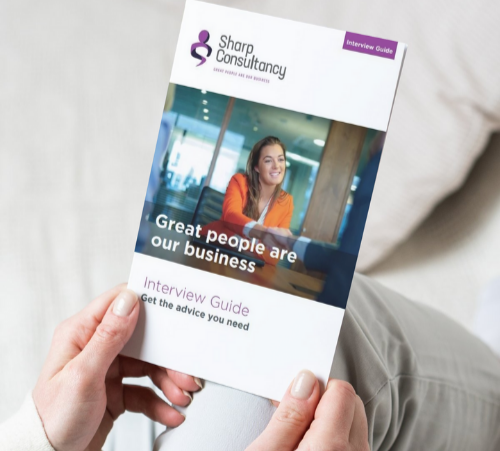
A person sat down holding a version of the Sharp Consultancy Interview guide, using the tips to complete a successful job interview.

​Interview Advice – Candidate FAQs.

What technical questions should I expect in an accountancy interview?

You might be asked about budgeting, forecasting, month-end processes, or specific systems like Excel, Sage, or SAP. Be ready to talk through examples of reports you’ve produced or problems you’ve solved, especially if you're applying for roles like management accountant or financial analyst.

Should I talk about my salary expectations in the first interview?

If asked, keep your answer flexible and aligned with the market. You could say something like, “I’m open to a package in line with the role and responsibilities – and happy to discuss once there’s mutual interest.” We’re also here to advise you on what’s competitive.

How can I talk about my experience if I’m only part-qualified?

Focus on the skills you’ve already developed — like supporting audits, producing reports, or working with stakeholders. Employers value hands-on experience and ambition, so highlight what you’ve done and where you’re heading.

What questions should I ask at the end of the interview?

Try: “What would success look like in this role after 6 months?” or “How does the finance team support wider business decisions?” It shows you’re thinking beyond the job description and keen to add value.

Can I bring notes into an interview?

Yes — especially for virtual interviews. A few bullet points with key achievements or questions is fine. Just don’t rely on them too much — try to keep it natural and conversational.

What Our Candidates Say About Us?

  • Joshua
    Joshua

    ​He's been helping me for years and never lets me down. 

  • Ross
    Ross

    ​Lee Sweeney opened my eyes to the importance and impact of a top quality recruiter. Everything from having a face to face introductory meeting to the strategic guidance throughout the process. Simply put, the process was best in class. 

  • Neil
    Neil

    ​I have got quite a few roles through yourselves over the years and I still recommend your company when someone is looking.

  • Dean
    Dean

    ​Sharp have helped me get my last two roles and everyone I’ve dealt with is very personable and professional. Will definitely be starting here next time I’m looking for a new role.

  • Oliver
    Oliver

    ​Tom was excellent to work with. He made the process of finding a new position as seamless and stress free as possible. So, I can’t say enough good things about Tom and the rest of the team at Sharp.

  • Lorenzo
    Lorenzo

    Jack was fantastic throughout every interaction. Thoroughly professional and genuinely a pleasure to talk to him. ​